
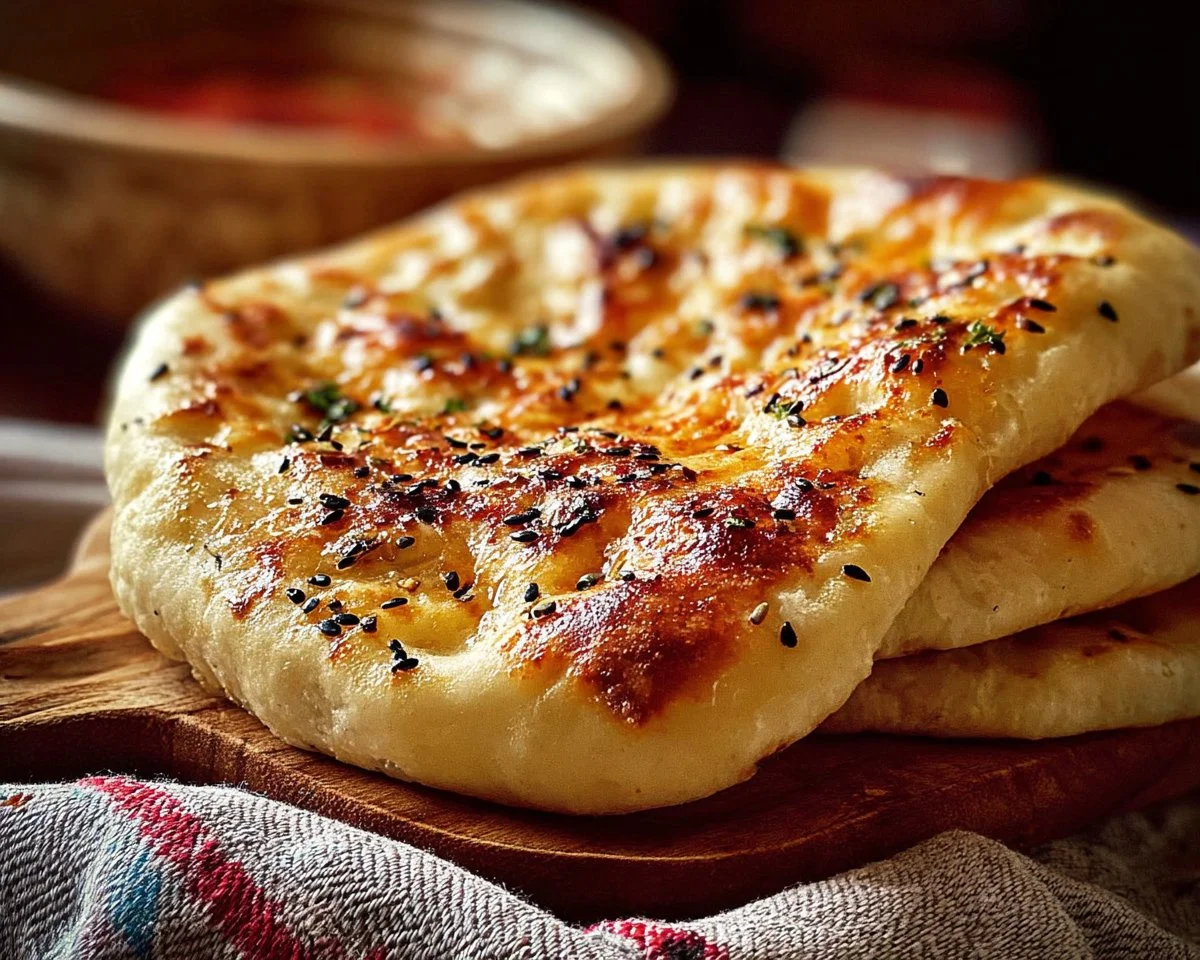
Warm, soft bread made on the stove—quick and tasty.
introduction
This stovetop Turkish bread makes warm, soft flatbreads in a short time. The bread works for sandwiches, dips, or plain with butter. For another simple dough idea, you can look at a related recipe for campanelle shapes and tips at campanelle recipes and tips.
why make this recipe
This recipe is fast and needs few ingredients. You do not need an oven. The bread cooks in a pan and stays soft. It fits many meals and is easy for beginners.
how to make Stovetop Turkish Bread
Follow the steps below. Work in a clean space and keep your pan at medium heat so the bread browns but does not burn.
Ingredients :
– 2 cups all-purpose flour, – 1 teaspoon active dry yeast, – 1 teaspoon salt, – 1 tablespoon sugar, – ¾ cup warm water, – 1 tablespoon olive oil, – Optional toppings (e.g., sesame seeds, nigella seeds, or herbs)
Directions :
Creating Stovetop Turkish Bread is straightforward if you follow these simple steps:, In a small bowl, combine warm water, sugar, and yeast. Let it sit for about 5-10 minutes until it becomes frothy., 2. Mix Dry Ingredients: In a large bowl, whisk together the flour and salt., 3. Combine Ingredients: Pour the yeast mixture and olive oil into the flour mixture. Stir until a dough begins to form., 4. Knead the Dough: Transfer the dough to a floured surface. Knead for about 5-7 minutes until the dough is smooth and elastic., 5. Rest the Dough: Place the dough in a lightly oiled bowl, cover it with a damp cloth, and let it rest for about 10 minutes., 6. Divide the Dough: After resting, divide the dough into 4 equal pieces and shape each piece into a ball., 7. Flatten the Balls: Using a rolling pin, flatten each ball into a circle about ½ inch thick., 8. Add Toppings: If desired, sprinkle the tops with sesame seeds or your choice of herbs for added flavor., 9. Cook the Bread: Heat a non-stick skillet over medium heat. Place one dough circle into the skillet and cook for about 3-4 minutes on each side until golden brown and cooked through., 10. Repeat: Continue this process for the remaining dough circles, adjusting the heat as necessary to avoid burning., 11. Serve Warm: Once all pieces are cooked, serve the Stovetop Turkish Bread warm with your favorite dips or dishes.
These steps will guide you in creating this incredible bread effortlessly.
how to serve Stovetop Turkish Bread
Serve warm for best taste. Use it for:
- Dipping in olive oil, yogurt, or hummus.
- Wrapping grilled meats or vegetables.
- Eating with butter and jam for a simple snack.
how to store Stovetop Turkish Bread
Let bread cool to room temp. Store in a plastic bag or airtight container for up to 2 days at room temp. For longer storage, freeze flat breads in a sealed bag for up to 1 month. Reheat in a pan or toaster before serving.
tips to make Stovetop Turkish Bread
- Use warm water, not hot, to activate yeast.
- Knead until smooth and elastic for a better texture.
- Let the dough rest; it makes the bread softer.
- Keep pan heat medium; lower if the bread browns too fast.
- Press gently with a spatula while cooking to get even contact.
variation (if any)
- Add 1 tablespoon yogurt to the dough for a softer crumb.
- Mix herbs into the dough for more flavor.
- Brush with melted butter and sprinkle sesame or nigella seeds before cooking.
FAQs
Q: Can I use whole wheat flour?
A: Yes. Replace half the flour with whole wheat for a nuttier taste. You may need a little more water.
Q: Do I have to use yeast?
A: Yeast gives the best texture. For a quick flatbread, use baking powder but expect a different taste and texture.
Q: How thick should the dough be?
A: About 1/2 inch thick works well. Thinner will cook faster; thicker will be softer inside.
Q: Can I cook more than one bread at a time?
A: Only if your pan is large enough. Cook one at a time for even heat.
Conclusion
If you want a yogurt-based Turkish flatbread idea to try later, see this recipe for a similar style: Greek Yogurt Turkish Flatbread (Bazlama) – The Café Sucre Farine.