
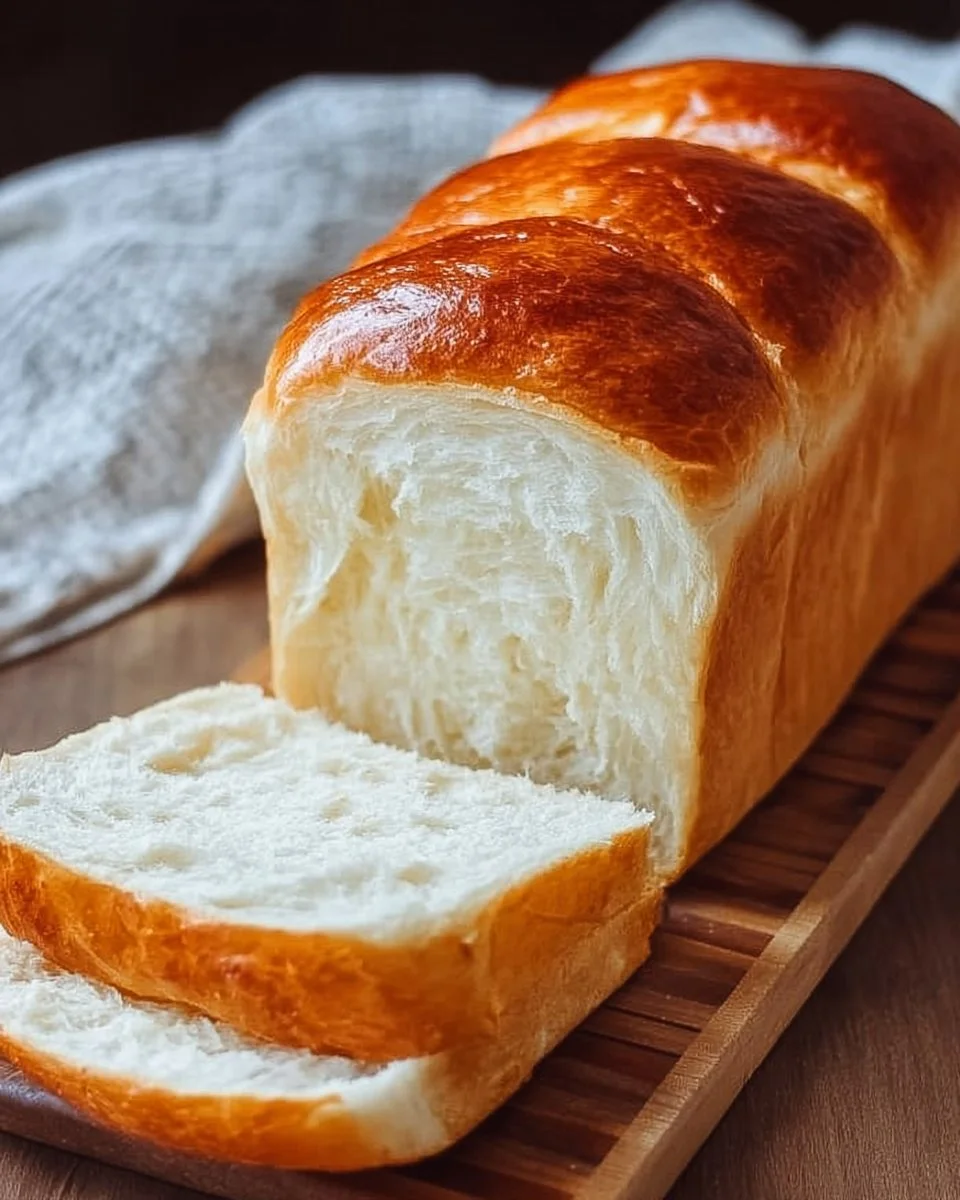
Ingredients and cooking instructions:
Easy Milk Bread is the kind of recipe that feels like a warm blanket you can slice. It’s soft, slightly sweet, and perfect for toast, sandwiches, or just tearing off a fluffy piece while it’s still a little warm. This version is made for home kitchens in the U.S., uses easy-to-find ingredients, and gives you that pillowy, bakery-style texture without complicated steps.
Ingredients (makes 1 loaf, 9×5-inch pan)
For the dough:
- 3 1/4 cups (390 g) all-purpose flour (plus a little extra for dusting)
- 2 1/4 teaspoons (1 packet) instant yeast
- 3 tablespoons (38 g) granulated sugar
- 1 teaspoon fine salt
- 1 large egg (room temperature)
- 3/4 cup (180 ml) warm whole milk (about 105–110°F)
- 4 tablespoons (57 g) unsalted butter, softened (room temperature)
For the egg wash (optional but recommended):
- 1 egg
- 1 tablespoon milk
Optional finishing:
- 1 tablespoon melted butter (for brushing after baking)
Equipment:
- 9×5-inch loaf pan
- Mixing bowl (or stand mixer)
- Measuring cups/spoons or kitchen scale
- Clean kitchen towel or plastic wrap
- Instant-read thermometer (nice to have)
Step-by-step instructions
- Warm the milk (the “cozy bath” step)
Warm your milk until it’s about 105–110°F. If it’s too hot, it can harm the yeast. If you don’t have a thermometer, it should feel warm like bathwater, not hot. - Mix the dry ingredients
In a large bowl (or the bowl of a stand mixer), whisk together:
- flour
- instant yeast
- sugar
- salt
Mixing the yeast into the flour helps it spread evenly so the dough rises consistently.
- Add the wet ingredients
Add the warm milk and the egg to the bowl. Stir with a spoon or mix on low speed until a shaggy dough forms. It might look a little rough at first, that’s normal. - Add butter and knead until smooth
Add the softened butter a tablespoon at a time. Knead the dough (by hand or mixer) until it becomes smooth, elastic, and slightly tacky.
- Stand mixer: 8–10 minutes on medium-low with a dough hook.
- By hand: 10–12 minutes on a lightly floured counter.
How to know it’s kneaded enough:
Try the “windowpane test.” Pinch off a small piece and gently stretch it. If it stretches thin enough to let light through without tearing right away, you’re in the sweet spot.
- First rise (until doubled)
Shape the dough into a ball and place it in a lightly greased bowl. Cover with a towel or plastic wrap.
Let it rise in a warm spot until doubled in size, about 60–90 minutes depending on your room temperature.
Warm spot ideas:
- Inside a turned-off oven with the light on
- Near (not on) a warm stove
- On top of the fridge
- Shape the loaf (the “pillows become a loaf” step)
Grease your 9×5-inch loaf pan.
Punch down the dough gently to release excess gas. Turn it onto a lightly floured surface.
For a pretty, fluffy pull-apart look:
- Divide the dough into 3 equal pieces.
- Shape each piece into a smooth ball.
- Place the 3 balls side-by-side in the loaf pan.
For a more classic loaf:
- Roll the dough into a rectangle (about 8×12 inches).
- Roll it up tightly from the short end like a cinnamon roll.
- Pinch the seam and place seam-side down in the pan.
- Second rise (until puffy)
Cover the loaf pan and let the dough rise again until the top is about 1 inch above the rim of the pan. This usually takes 45–75 minutes.
While it rises, preheat your oven to 350°F.
- Egg wash for shine (optional, but it makes the loaf look like a movie star)
Whisk 1 egg with 1 tablespoon milk. Gently brush the top of the risen dough. Try not to press down.
If you don’t want egg wash, you can brush with milk alone. The crust will be softer and less shiny, but still beautiful.
- Bake
Bake at 350°F for 28–35 minutes.
Check doneness:
- The top should be deep golden brown.
- The loaf should sound hollow when tapped.
- Internal temperature should be about 190°F in the center (best method).
If the top is browning too fast:
Tent loosely with foil for the last 10 minutes.
- Cool (hardest step, emotionally)
Let the bread cool in the pan for 10 minutes, then transfer to a wire rack to cool completely.
If you slice too early, the steam can make the inside gummy. Give it at least 30–45 minutes if you can.
Optional: Brush with melted butter
Right after it comes out of the oven, brush the top with melted butter for a softer, richer crust.
Serving ideas (because this loaf likes attention)
- Toast + butter + honey
- PB&J that feels extra fancy
- French toast (soft inside, crisp edges)
- Turkey sandwich bread that doesn’t fight back
- Warm slice with jam and a pinch of flaky salt
Storage and freezing
- Room temp: Store in a bread bag or airtight container up to 3 days.
- Fridge: Not recommended (it dries bread faster).
- Freeze: Slice the loaf, wrap well, and freeze up to 2 months. Toast slices straight from frozen.
Troubleshooting quick fixes
- Bread didn’t rise: yeast may be old, or milk was too hot/cold, or the room was chilly. Move it to a warmer spot and give it more time.
- Dense loaf: not enough kneading or under-proofed. Next time, knead until elastic and let it rise until truly puffy.
- Top cracked: oven too hot or dough rose too quickly. Still tasty, just a “rustic hairstyle.”
- Dry bread: overbaked. Pull it closer to 28–30 minutes and check internal temp.